PostJune 24, 2026
When You Can't Pick Up the Brush: Art, Grief, and the Permission to Create Ugly
After losing my father, I couldn't pick up a brush. This is what I learned about grief, AI-assisted art, and the permission to create ugly.
By Charoa
I lost my father on June 13th.
For days after, the idea of creating anything felt almost offensive — like trying to hum a song in the middle of a funeral. What was the point of making something beautiful when everything felt broken? What could a paintbrush possibly do with this?
And yet, I sat down. Not because I felt ready. I sat down because some stubborn, quiet part of me knew that if I waited until I was ready, I might wait forever.
The First Thing I Made Was Ugly
I didn't open my sketchbook. I didn't reach for my new version of "Be Bold" that was waiting on my easel — it was partially complete, full of colour, a joyful piece that felt like a slap in the face to where I actually was emotionally. Instead, I opened my AI art tools. I opened my Art Therapy Wellness app, which I have been building specifically for this — for the kind of emotional expression that doesn't require technique, only honesty.
Not what I thought I should be feeling. Not the poetic, elevated kind of grief you read about in essays. The heavy, ugly, suffocating kind. The kind that sits on your chest.
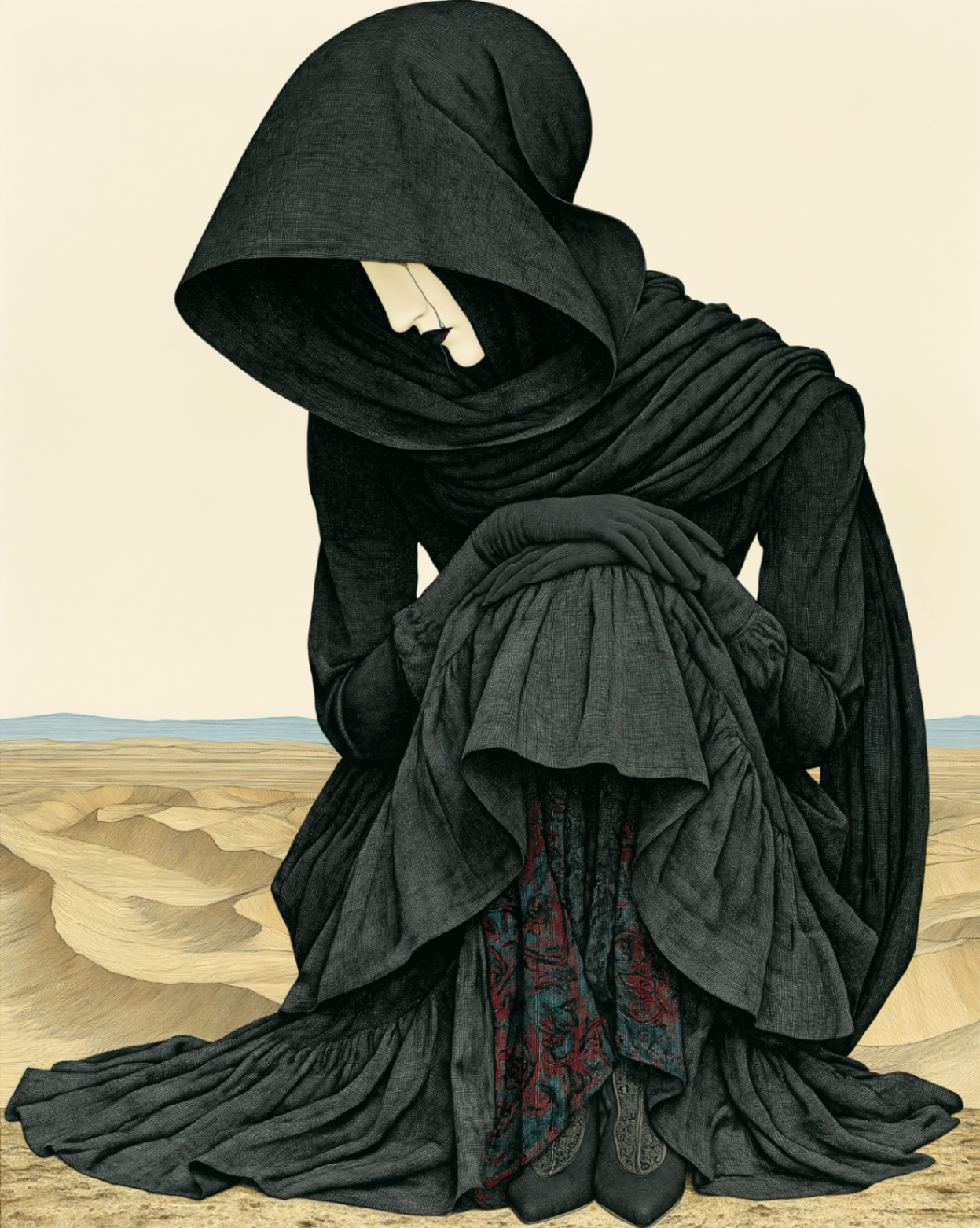
I didn't care about beautiful. I didn't care about technically correct, or composed, or shareable. I typed words that felt true: shadow, weight, hollow, the space where someone used to be. And the images that came back were dark. Some were haunting. Some were painful to look at. I sat with them anyway.
Then I wrote a poem. It made me cry. That was exactly the point.
Dark Art Has Always Had a Place
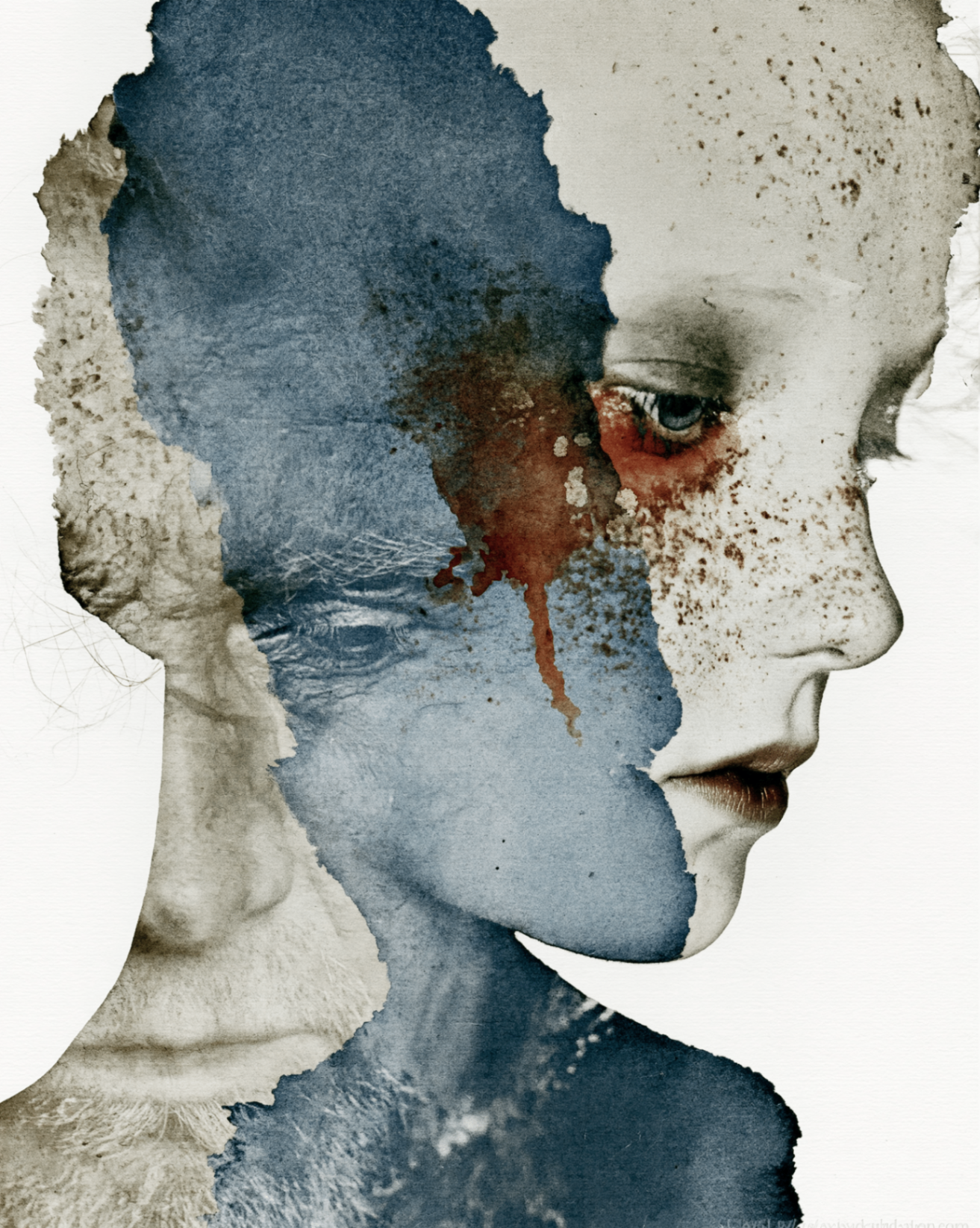
We don't talk about this enough: dark art is not something to be avoided. It is, in fact, some of the most necessary art we have. Grief imagery, shadow, sorrow — these have always had a home in the creative tradition. Think of the blues. Think of Picasso's Blue Period. Think of every elegy ever written, every requiem ever composed. The artist's role has never been only to make things pretty. It has always been, in part, to make the unbearable visible.
When we look at a painting where the colours are heavy and low, where the figure is bent or absent, where the sky offers no comfort — we recognize something. We feel met. Art that comes from grief does something essential: it names what we didn't have words for. It reaches through the silence and says, I know this feeling. I have been here too.
The pieces I made in those first days, I may never share. Some of them are private in the way that a journal is private — not because they are shameful, but because they belong only to the moment they were born in. That is allowed. Not everything we create has to be offered to the world. Some art exists just to hold us while we fall apart.
AI Art as a Bridge, Not a Bypass
Here is where my experience surprised me, and where I think the conversation about AI in creative practice needs more nuance.
I've heard the argument that AI art isn't "real" art — that it's a shortcut, a cheat, a replacement for the authentic creative act. I disagree, and here is why: in the days after my father died, I could not have made art any other way.
The emotional and cognitive load of grief is enormous. When you are in it — truly in it — the gap between the feeling and the expression of it feels impossibly wide. Picking up a brush requires intention, physical steadiness, technical thought. It requires a kind of executive function that grief temporarily dismantles.
AI-assisted creation let me collapse that gap. I could think in images and words — rough, raw, incomplete — and something would come back that I could actually look at. I could hold the feeling at arm's length, examine it, sit with it, let it move through me.
It wasn't a bypass. It was a bridge.
I moved across that bridge slowly. First the AI imagery. Then the poem. Then the imagery I created inside my Art Therapy Wellness app, which has its own particular kind of intimacy because I built it specifically for this — for the kind of emotional expression that doesn't require technique, only honesty. The images that came back from that session were the ones that finally made me feel seen by myself. That is not a small thing.
Mindfulness Without Knowing It
After several days of working this way — quietly, privately, without any expectation of product or outcome — something shifted. I walked back to my easel.
The painting waiting for me was too bright. Too joyful. I almost walked away again. But instead, I did something I teach in my facilitation work and rarely remember to apply to myself: I got small. I stopped looking at the whole of it. I found one corner, one detail, one edge where I could just be present with the process. Not the painting as a destination. Just the brush. Just the stroke. Just this small decision right here.
That is mindfulness in its most practical form. When the whole feels impossible, you find the piece that isn't. You show up for what's directly in front of you, and you let the rest exist without demanding you fix it.
I didn't finish the painting that day. But I painted. And that was everything.
What I Want You to Hear
If you are in grief — of any kind, for any reason — and you feel the pull to create, I want you to follow it. Not toward anything polished or shareable or impressive. Just toward the feeling. Toward whatever image is sitting behind your eyes. Toward the words that keep surfacing.
You don't need to be ready. You don't need to be well. You don't need the right tools or the right studio or the right emotional state.
You are allowed to make ugly things. You are allowed to make things you'll throw away. You are allowed to cry while you make them, and to feel worse before you feel better, and to sit with something dark and sorrowful and let it be exactly what it is.
Grief needs a place to go. Art — in all its forms, with all its tools — can be that place.
For me, in those raw and unsteady days after June 13th, making art was not an act of inspiration. It was an act of survival. It was the way I began to process what my hands and my heart could not yet fully understand.
I am still in it. I am still making things.
And I think my father, who watched me build a career out of helping people find expression through creativity, would understand.
Charoa is the founder of MindSoul Meditations. She is an expressive arts facilitator, visual artist, and poet based in Timmins, Ontario.
Enjoying the program?
Members get workbooks, ebooks, prompt guides, and more — every season.
Join on Patreon